Retaining Wall Soil and Backfill: What Actually Matters
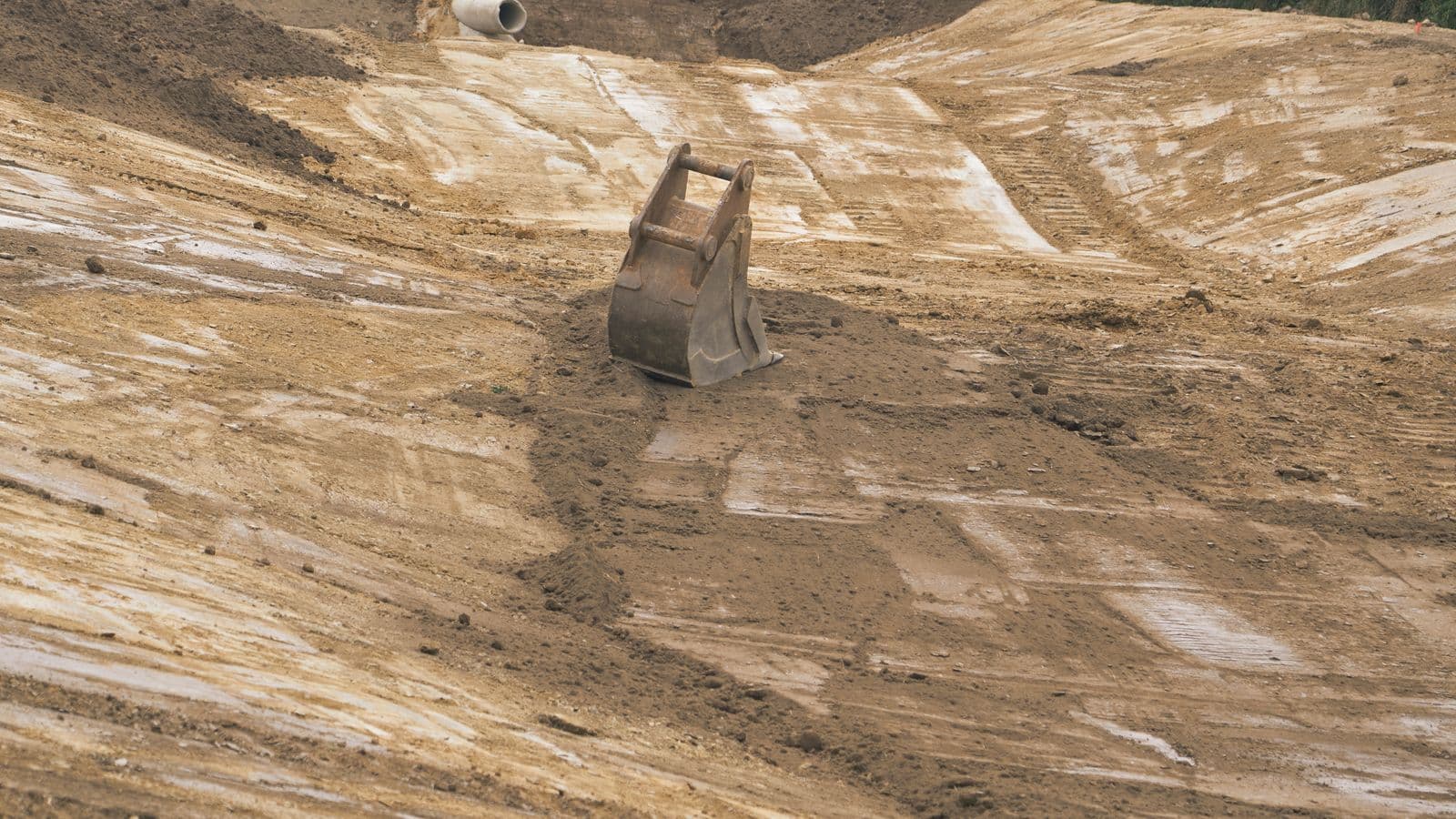
Most retaining wall problems don't start with bad concrete or a badly stacked block. They start in the dirt. Soil and backfill for retaining walls decide almost everything else about a design: how thick the wall needs to be, how deep the footing goes, and whether the whole thing drains or turns into a bathtub. Get the soil wrong and you're either over-paying for a wall that didn't need to be that big, or under-building one that's quietly loading up for a failure. This guide walks through both soils that matter, how to tell them apart, and what to actually do about it.
- Two different soils matter: backfill behind the wall (pushes on it) and foundation soil under it (carries it).
- Clean sand or gravel backfill pushes with roughly 30 pcf of equivalent fluid pressure, per IBC Table 1610.1. Clay can push with 60 pcf or more, double the load.
- High-plasticity clay (CH) should never be used as backfill. It swells, holds water, and traps hydrostatic pressure against the wall.
- Foundation bearing capacity ranges from 1,500 psf for silt and clay up to 3,000-12,000 psf for gravel and rock, per IBC Table 1806.2.
- A cheap test pit and a squeeze test can tell you 80% of what you need to know before you ever call an engineer.
- Swapping clay backfill for clean granular fill is one of the highest-value changes you can make to a wall design.
How to work out what soil you've actually got
Before you can design anything, you need to know what's in the ground. Not what you think is there, what's actually there. Homeowners are notorious for assuming their yard is "just dirt" and finding out later it's a mix of clay, old construction debris, and three inches of topsoil over hardpan.
The cheapest way to check is to dig. A single test pit, 2-3 ft deep, at the wall location tells you more than any online soil map. Look at:
- Colour and texture — reddish-brown, sticky, and slick when wet usually means clay. Tan or grey and gritty usually means sand.
- The ribbon test — squeeze a moist handful between your fingers. Sand won't hold a ribbon at all. Silt holds a short, crumbly one. Clay forms a long, smooth ribbon over an inch or two before breaking.
- Drainage — pour a bucket of water into the pit. If it's gone in ten minutes, you've got granular soil. If it's still sitting there an hour later, you've got clay or a high water table, or both.
For a broader picture before you dig, the USDA's Web Soil Survey is free and covers more than 95% of US counties with mapped soil units down to the parcel level, according to the USDA Natural Resources Conservation Service. It won't replace a test pit, but it's a useful first pass, especially if you're still deciding where on the property to put the wall.
One homeowner we hear about often: they assumed their sloped backyard was "native clay all the way down," priced a wall for the worst case, and were about to over-engineer the footing. A single test pit found 18 inches of loose sandy fill from an old landscaping job, sitting over the clay. That changed the bearing assumption completely, and the footing design with it.
Backfill pressure by soil class
The backfill is the material you put back behind the wall after it's built. It's the thing physically pushing on the wall, so its type drives the lateral pressure a wall must resist. IBC Table 1610.1 sets this as an equivalent fluid pressure, meaning the soil behaves, for design purposes, like a fluid of that density pushing sideways.
| Soil class (USCS) | Description | Design lateral pressure |
|---|---|---|
| GW, GP, SW, SP | Clean sand & gravel | 30 pcf |
| GM, SM | Silty sand & gravel | 40-45 pcf |
| SC, ML, CL | Clayey sand, low-plasticity silt/clay | 60 pcf |
| CH | High-plasticity, expansive clay | Not permitted as backfill |
That's not a small spread. Going from clean sand to clayey silt roughly doubles the pressure the wall has to resist. Everything downstream, wall thickness, footing width, reinforcement, geogrid length, scales with that number. It's why the wall design calculator asks for backfill type up front rather than assuming one.
Why clay is the wall's worst enemy
Clay causes trouble for three separate reasons, and they compound each other.
First, it's simply heavier in the design sense: at 60 pcf equivalent fluid pressure, it's pushing twice as hard as clean sand for the same wall height. Second, clay is nearly impermeable, so water that gets behind the wall has nowhere to go. It ponds against the back face and adds full hydrostatic pressure on top of the soil pressure, which is exactly what a drainage layer is meant to prevent. Third, high-plasticity clay physically swells when it gets wet and shrinks when it dries, a cycle that can crack facings, tilt caps, and work fasteners loose over a few winters even on a wall that was never overstressed in a single event.
"Drainage is the single most critical factor in long-term segmental retaining wall performance." — Concrete Masonry & Hardscapes Association (formerly NCMA), Design Manual for Segmental Retaining Walls
That's precisely why the standard fix isn't a bigger wall, it's a different backfill. Excavate the clay out for a few feet behind the wall, backfill with clean, free-draining crushed stone or sand-gravel, and tie it into a drain pipe at the base. You've cut the design pressure roughly in half and given water somewhere to go, all without changing the wall's height. For the mechanics of that drainage layer, see our guide to retaining wall drainage.
Foundation bearing capacity: what's holding the wall up
Separate question, separate soil: what's under the footing has to carry the wall's weight plus the load it's holding back, without settling unevenly or squeezing sideways. IBC Table 1806.2 gives presumptive (assumed, no testing required) allowable bearing values for common soil and rock types.
| Soil / rock type | Presumptive allowable bearing |
|---|---|
| Crystalline rock | 12,000 psf |
| Sedimentary rock | 4,000 psf |
| Gravel (GW, GP) | 3,000 psf |
| Sand, silty sand, clayey sand | 2,000 psf |
| Silt, clay (ML, CL) | 1,500 psf |
Lower bearing capacity doesn't mean you can't build, it means the footing has to spread the same load over more area, or go deeper to reach better soil. A wall on 1,500 psf silt might need a footing half again as wide as the same wall on 3,000 psf gravel, purely to keep the pressure under the base within limits. That's a real cost difference in concrete and excavation, which is why it pays to know your bearing soil before you order materials, not after. The base calculator will run both numbers side by side so you can see the trade-off.
Weak foundation soil often shows up alongside other red flags worth checking at the same time, like whether you're building on a slope or need extra reinforcement. Our guides on building on a slope and when geogrid is needed cover those related decisions.
Testing and improving soil on site
You don't need a geotechnical lab to make a reasonable call on most residential walls, but you do need to look properly.
Simple field checks
- Test pit, as above, dug to at least footing depth plus 12 in, so you can see what's actually under the design elevation, not just the topsoil.
- Water table check, note if the pit fills with groundwater. A shallow water table changes both bearing and drainage design significantly.
- Compaction check, if the soil crumbles apart easily and looks disturbed rather than layered, it may be loose fill rather than native ground, and fill needs to be compacted or accounted for separately.
When to bring in an engineer
For walls over about 4 ft, walls carrying a slope or structure above them, or any site where the test pit turns up something unexpected (organic soil, debris fill, standing water), it's worth getting a geotechnical or structural engineer to look at it properly. Our engineering basics guide explains the three checks (sliding, overturning, bearing) an engineer runs, so you know what they're looking for. If you'd rather hand the whole job off, find a local pro who can pair a site visit with the right design.
Improving poor soil is usually cheaper than most people expect. Over-excavating a metre or so behind the wall and replacing native clay with compacted granular fill is standard practice specifically because it improves both numbers at once, lower backfill pressure and, if it's under the footing too, better bearing.
Drainage and soil work as one system
It's tempting to treat backfill selection and drainage pipe as two separate line items, but they're really one system. Free-draining backfill only stays free-draining if water that enters it has somewhere to exit, and a perforated drain pipe only works if the material around it lets water reach it in the first place. Wrap both in a layer of filter fabric to stop fines from silty native soil migrating in and clogging the drain rock over time, a slow failure mode that can take years to show up but is entirely preventable at build time.
According to the International Code Council, which publishes the IBC these tables come from, presumptive design values are meant as a starting point for typical conditions, not a substitute for site-specific verification on unusual or marginal soils. That's the whole point of a test pit: confirm you're actually in "typical" territory before you rely on a table number.
Between the backfill class you choose and the drainage detail behind it, most of a wall's long-term performance is decided before a single block goes down. Run your own numbers through the calculator with the soil you actually found, not the soil you assumed, and check the methodology page if you want to see exactly how those pressures and bearing values feed into the design.
FAQs
What is the best backfill material for a retaining wall?
Clean, free-draining crushed stone or sand-gravel (USCS classes GW, GP, SW, SP) is the best choice. It generates the lowest lateral pressure, around 30 pcf, and drains water away instead of trapping it against the wall.
Can I use native clay soil as backfill?
Low-plasticity clay (CL) can sometimes be used with care, but it roughly doubles the design pressure compared with clean granular fill. High-plasticity clay (CH) should not be used as backfill at all, since it swells, holds water, and adds hydrostatic pressure the wall isn't designed for.
How do I know what type of soil I have without a lab test?
Dig a test pit at least as deep as your planned footing, then check colour, texture, and how it behaves when wet. A ribbon test (squeezing moist soil between your fingers) and a simple drainage test (pouring in water and timing how fast it disappears) will tell you whether you're dealing with sand, silt, or clay.
Does foundation soil type affect how deep a footing needs to be?
Yes, indirectly. Weaker bearing soil, like silt or clay at around 1,500 psf, usually needs a wider footing to spread the load, and sometimes a deeper one to reach firmer soil. Stronger soils like gravel or rock, at 3,000-12,000 psf, can carry the same wall on a smaller footprint.
How much does poor backfill actually cost you on a wall design?
It can add up fast. Doubling the design pressure by using clayey backfill instead of clean gravel often means a thicker wall, a wider footing, and sometimes geogrid reinforcement that wouldn't otherwise be needed, on top of the ongoing risk of water pressure building up behind the wall.
Base width, factors of safety, materials and cost, all free.