Retaining Wall Footing Depth: The Right Number
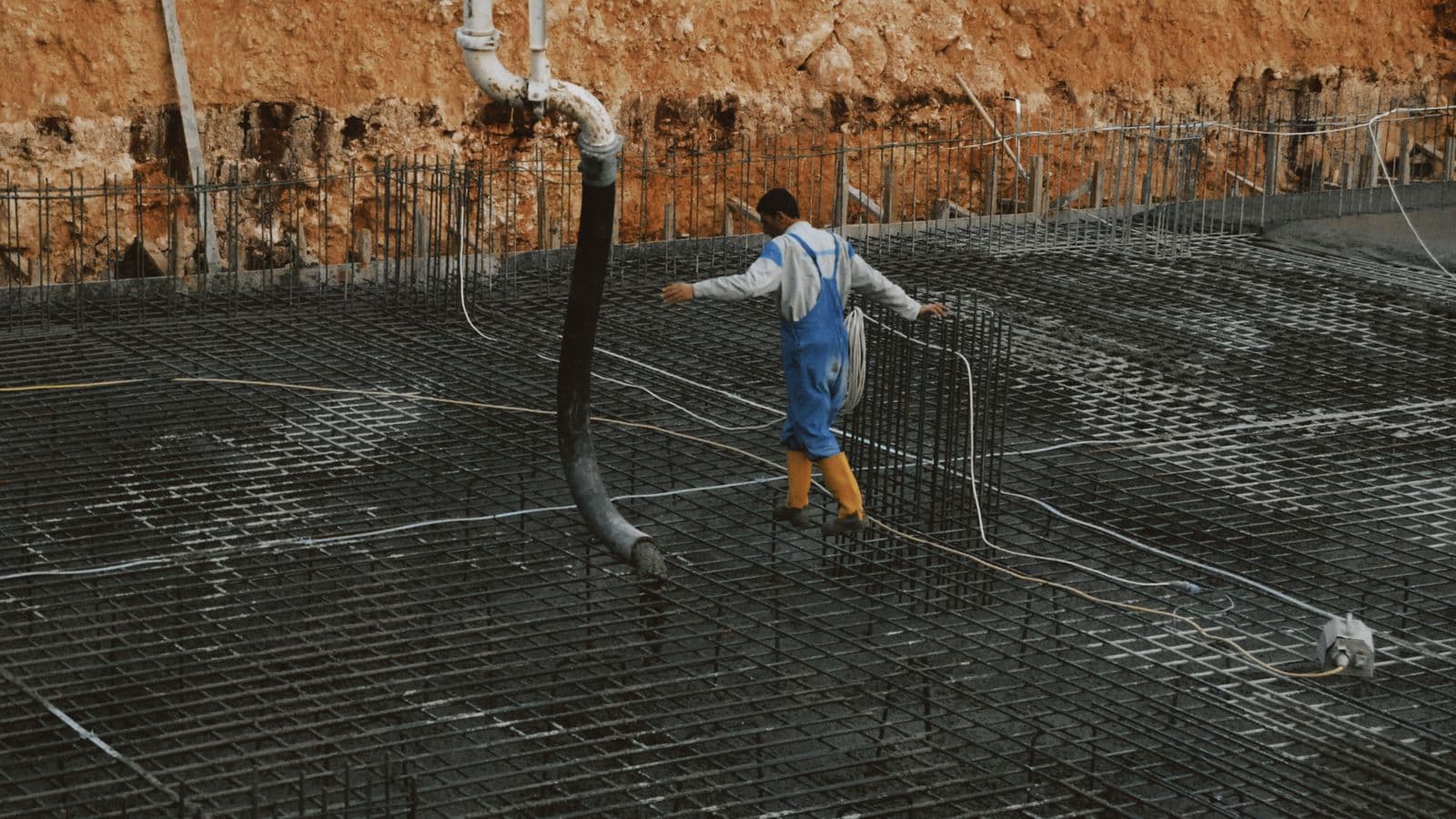
Dig a footing too shallow and you're gambling with the one part of a retaining wall nobody ever sees again once it's buried. Retaining wall footing depth decides whether that wall stays put for 40 years or starts leaning after its first hard winter. Get the depth wrong and you'll be looking at cracked block, a bulging face, or a wall that's crept an inch forward every freeze-thaw cycle. The good news: the rule isn't complicated once you know the two forces you're designing against, and this guide walks through exactly how to work out the right number for your site.
- Footings must clear two hazards: frost heave (seasonal) and weak soil (permanent). Whichever demands more depth wins.
- Frost depth ranges from 0 in in southern Florida to 60 in or more in Minnesota and similar northern states.
- Segmental block (SRW) walls use a compacted crushed-stone leveling pad, not a poured footing — typically 6 in deep with the first course buried.
- Poured concrete walls need a cast-in-place footing roughly 1 ft wide per 1 ft of wall height, set at frost depth.
- Minimum bearing capacity for most residential retaining walls is 1,500 psf on undisturbed soil.
- Always dig to native, undisturbed ground even if that means going deeper than the frost line requires.
Why footing depth is the whole ballgame
A retaining wall lives or dies by what's underneath it. The blocks or concrete you see are just the visible 10%. Everything about whether the wall stands straight for decades comes down to what the footing is sitting on and how deep it goes.
Two separate problems drive the depth number, and they don't always point the same direction. Frost heave is seasonal and violent — it can lift a structure inches in a single winter. Bearing failure is slow and quiet — a footing on loose fill just sinks a little more every year until the wall tilts. A good footing design solves both at once, which is why the "right number" isn't one fixed figure. It's whichever depth is deeper: the frost line or the depth to competent soil.
Skipping this step is the single most common reason homeowner-built walls fail. A wall that looks fine in October can be leaning by March because the crew never checked how deep the ground actually freezes.
Frost heave, explained simply
When soil contains moisture and the temperature drops below freezing, ice lenses form and grow, pulling more water up from below like a wick. That growing ice pushes the soil above it upward — sometimes with tremendous force. Frost heave pressure can exceed the load imposed by a typical residential structure, which is exactly why building codes treat frost protection as non-negotiable rather than optional in cold regions.
The fix is straightforward: put the bottom of the footing below the depth where the ground actually freezes. Soil below that line stays at a stable temperature year-round, so there's no ice lens to form and nothing to push the footing around.
"The primary strategy for protecting foundations from frost is to place the footing below the maximum depth of frost penetration, so there is no frozen, expansive soil beneath the bearing surface to exert an upward force." — adapted from International Code Council frost-protection guidance, IRC Section R403.3
Here's the anecdote worth remembering: a homeowner in Duluth, Minnesota once built a small block retaining wall with a footing dug to 24 inches, thinking that was plenty. Local frost depth runs close to 60 inches. By the second spring thaw, the wall had heaved nearly 3 inches out of level along one section, cracking the cap units and opening a gap at the base where the backfill soil started washing through. The fix cost more than building it right the first time would have — the whole run had to come out and be re-footed below frost depth.
Frost depth by region
Frost depth isn't a single national number — it swings enormously between a Minnesota winter and a Texas one. Codes generally reference locally adopted design frost depths, which your building department can confirm, but the table below gives realistic, commonly cited figures for planning purposes.
| Region | Typical frost depth |
|---|---|
| Minnesota (Twin Cities/north) | ~60 in |
| Chicago, Illinois | ~36 in |
| Denver, Colorado | ~30–36 in |
| North Carolina (Piedmont) | ~12 in |
| Texas (most of state) | ~4–6 in |
| Florida | ~0 in |
Use the calculator to pull the frost depth for your specific state automatically rather than eyeballing it from a regional table — local variation within a state can be significant depending on elevation and microclimate. If you're building in a colder state, it's worth reading through the Minnesota page for state-specific notes, and if you're in a warmer, low-frost state like Texas, the Texas page covers what actually drives footing depth there instead (usually bearing capacity and expansive clay, not frost).
Bearing capacity and undisturbed soil
Frost isn't the only enemy. Even in Florida, where frost depth is effectively zero, a footing still needs to sit on soil strong enough to carry the wall without settling.
The rule here is simple to state and easy to skip: dig down until you hit undisturbed, native soil — not topsoil, not old fill, not soil that's been graded or trucked in at some point. Fill settles unevenly over time, and a wall built on it will follow the fill down, usually unevenly, which shows up as a wave or lean in the wall face.
Most residential retaining wall designs assume a minimum bearing capacity of 1,500 psf for the founding soil. That's a conservative, commonly used default for typical clay or sandy loam; soft clay, peat, or recently disturbed fill can fall well below it. If you're not sure what you're dealing with, the USDA NRCS Web Soil Survey is a free tool that lets you look up general soil classification for your property by address — it won't replace a geotechnical report for a tall or high-stakes wall, but it's a useful first check for a backyard project.
Common mistake: stopping at the frost line and ignoring the soil
A lot of DIY walls dig exactly to the frost depth number and stop, assuming that's the finish line. If that depth happens to land in loose fill instead of native soil, the wall still has a bearing problem even though it technically cleared the frost rule. The fix: keep digging past frost depth until you reach firm, undisturbed ground, then verify it's compact enough — a shovel that suddenly meets real resistance, or soil that doesn't crumble apart in your hand, is a decent field sign you've hit it.
Block walls vs poured concrete: different footing rules entirely
The construction type changes what "footing" even means.
Segmental block (SRW) walls
Segmental retaining wall units don't sit on a poured concrete footing at all. Instead, they sit on a compacted crushed-stone leveling pad, typically 6 inches deep, with the first course of block buried below grade. The stone pad spreads the load evenly and lets water drain straight through instead of pooling against the base of the wall — the buried first course stops the toe of the wall from being undermined by erosion or frost action at the surface.
The NCMA's inspection guide for segmental retaining walls treats this leveling pad and embedment detail as one of the core checks on any SRW build, because a poorly compacted or too-thin pad is a frequent cause of early settlement. For more detail on how these units are engineered and sized, see the segmental retaining wall blocks design guide, and for the reasoning behind block selection versus poured walls, CMU retaining wall design is worth a read too.
Poured concrete (gravity or cantilever) walls
Poured concrete walls need a genuine cast-in-place footing, and it has to go to frost depth, not just to a fixed shallow number. A common rule of thumb is 1 ft of footing width for every 1 ft of wall height, though this is a starting estimate, not an engineering spec — anything over about 4 ft in height should be sized by an engineer based on actual bearing tests and local soil conditions, since the loads and overturning forces scale quickly with height.
The concrete retaining wall calculator will size footing width and depth together based on your wall height and the frost depth for your location, which is the fastest way to get a starting number before you call in an engineer for anything tall or load-bearing.
How to check your own site
1. Look up your local frost depth. Use the calculator or ask your building department for the locally adopted design depth — don't rely on a national average, since it varies by county in some states. 2. Check what's actually in the ground. Dig a test hole at the footing location and look for a change from loose, mixed, or organic soil to firm native ground. The Web Soil Survey gives a general read on soil type for your parcel as a sanity check. 3. Compare the two depths and use the deeper one. If frost depth is 36 inches but you don't hit competent soil until 44 inches, dig to 44. 4. Decide block or poured, and follow that system's rule. Block gets a 6-inch stone pad plus a buried course; poured concrete gets a real footing sized to wall height and set at frost depth. 5. Get a second opinion for anything over 4 ft. A local pro can confirm bearing capacity and footing size quickly — find a pro near you if you'd rather not guess on a taller wall.
A worked example
Say you're building a 3-ft-tall segmental block wall in Chicago, where frost depth runs about 36 inches. Because it's an SRW system, the frost rule doesn't apply the same way it would to a poured footing — SRW leveling pads are commonly built shallower than full frost depth because the flexible, dry-stacked block system tolerates minor seasonal movement without cracking, unlike a rigid poured footing. The manufacturer's spec and local code will confirm the exact minimum, but a typical install still means: excavate for a 6-inch compacted stone pad, bury the first course of block (roughly 8–10 inches, depending on the unit), for a total dig of around 16–18 inches below the finished grade at the base of the wall.
Now take the same 3-ft wall built as poured concrete in the same city. Here the frost rule applies directly, because a rigid footing that heaves will crack. The footing bottom needs to sit at or below that 36-inch frost line, with a footing roughly 3 ft wide given the 1-ft-per-ft-of-height guideline, subject to an engineer's sign-off. That's double the excavation depth of the block wall, for the same wall height, purely because of how the two systems handle ground movement.
This is exactly the kind of comparison worth running before you commit to a wall type, since it changes both the excavation cost and the timeline. If you're leaning toward block for the exact reason that it needs less depth and less concrete, it's worth reading through how to build a retaining wall step by step before you dig, and pairing the footing decision with a solid look at soil and backfill choices, since drainage behind the wall matters just as much as what's underneath it.
FAQs
How deep should a retaining wall footing be?
It depends on your wall type and location. For poured concrete, the footing bottom should sit at or below your local frost depth — anywhere from 0 in in Florida to 60 in or more in Minnesota. For segmental block walls, total excavation is usually 16–18 inches: a 6-inch compacted stone leveling pad plus one buried course of block.
Do retaining walls need to go below the frost line?
Rigid poured concrete walls generally do, because frozen, expanding soil under a stiff footing can crack or lift it. Segmental block walls are more forgiving since the dry-stacked units can tolerate small seasonal movements, which is why they use a shallower stone leveling pad instead of a full-depth footing.
What happens if a retaining wall footing is too shallow?
In cold climates, a shallow footing sits in the seasonal frost zone, and ice lens formation can heave the footing upward each winter, cracking block, opening gaps, or tilting the wall out of level over a few seasons. In any climate, a shallow footing on weak or disturbed soil can also settle unevenly, causing the wall to lean or bulge over time.
Can I skip a footing for a short retaining wall?
Segmental block systems already skip a poured footing in favour of a compacted stone leveling pad, which is standard practice even for short walls. But you should never skip proper excavation to undisturbed soil, no matter how short the wall — a 2-ft wall on loose fill can still settle and crack.
How do I find the frost depth for my area?
The calculator looks up frost depth for your state automatically. You can also ask your local building department for the depth adopted in your jurisdiction's code, since it can vary within a state depending on elevation and local climate.
Base width, factors of safety, materials and cost, all free.