How Much Does a Retaining Wall Cost in 2026?
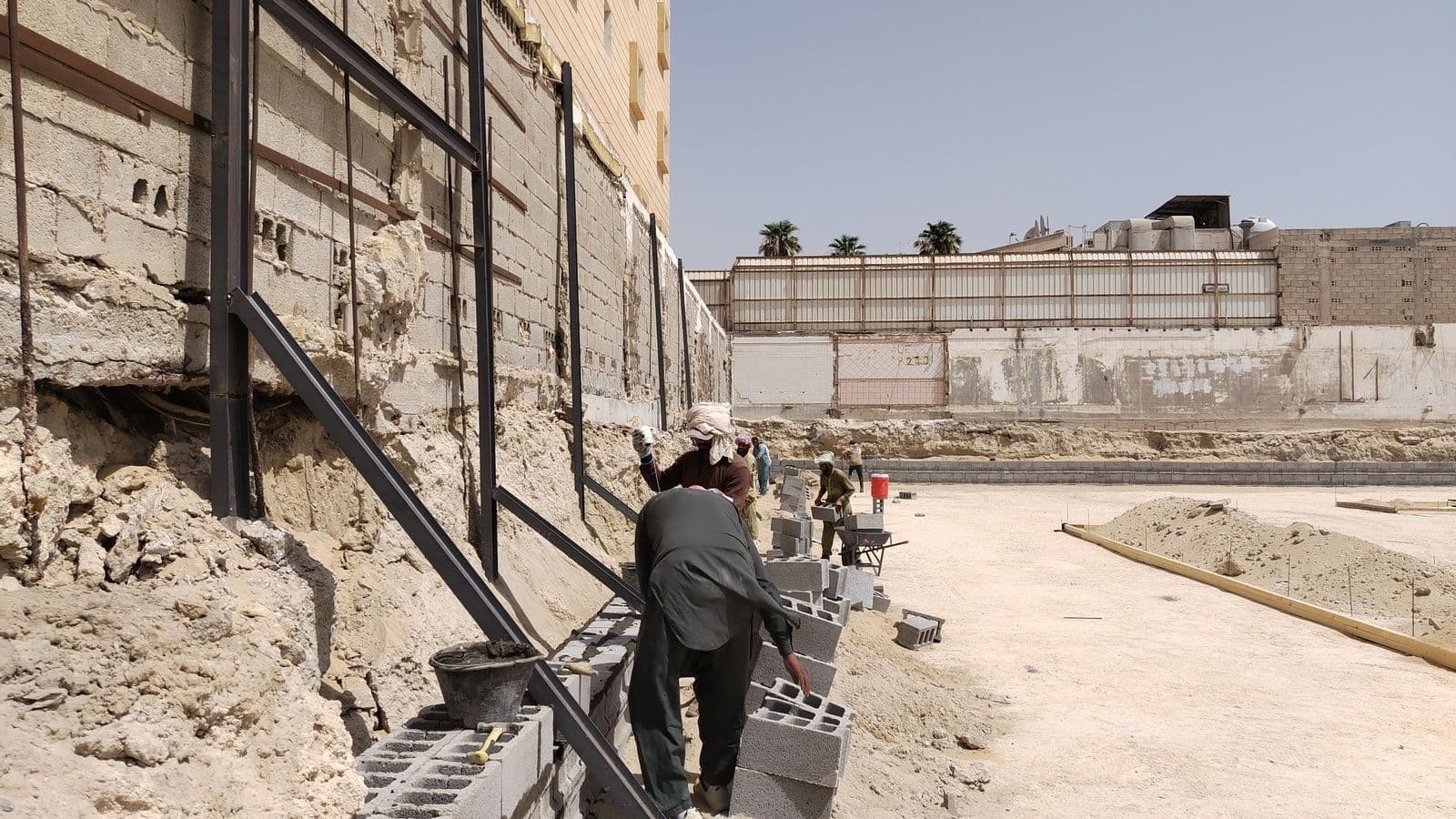
Ask five contractors what a retaining wall costs and you'll get five different numbers, mostly because they're all picturing a different wall. The honest answer starts with one idea: retaining walls are priced by the square foot of wall face (length × exposed height), not by length alone. A 30-ft wall that stands 4 ft tall is twice the work of one that's only 2 ft tall, even though the tape measure says the same "30 feet" both times. Once you price by face area instead of length, the numbers below stop feeling random and start looking like a proper budget.
- Installed cost runs $20-$75 per sq ft of wall face, depending on material, with poured concrete at the top and timber at the bottom.
- A typical 30-ft × 4-ft block wall (120 sq ft) lands around $3,600-$7,200 installed before regional adjustment.
- Walls over about 4 ft usually need geogrid or engineering, adding 20-40% to the cost.
- Materials alone are typically 35-45% of the installed price on a DIY block wall.
- Most US jurisdictions require a permit once a wall passes 4 ft in height, per the International Residential Code.
- Skipping drainage is the single biggest cause of wall failure, and it's cheap to do right the first time.
Cost per square foot by material
Every retaining wall quote should be reducible to a dollar-per-square-foot figure, because that's the only unit that lets you compare a block wall against a poured concrete one on equal terms.
| Material | Installed cost per sq ft | Typical lifespan |
|---|---|---|
| Segmental concrete block (SRW) | $30-$60 | 50+ years |
| Poured concrete | $40-$75 | 50-100 years |
| Timber / sleepers | $20-$40 | 15-25 years |
| Boulder / natural stone | $25-$55 | 50+ years |
A 30-ft × 4-ft block wall (120 sq ft of face) therefore lands around $3,600-$7,200 installed, before regional adjustments. Poured concrete looks pricier on paper, but it needs less repair over its life, which matters if you're comparing lifetime cost rather than day-one cost. Timber is the cheapest way in the door, but sleepers rot, especially where they sit in wet soil, so factor a replacement into your 20-year plan. If you want a side-by-side on how these materials actually behave, Block vs Concrete vs Timber walks through the trade-offs in more depth. For a first-pass number on your own project, the retaining wall cost calculator turns your dimensions straight into a price range.
A real project, worked through
Picture a fairly ordinary suburban backyard: the lawn slopes down 3.5 ft over about 25 ft, and the homeowner wants a flat patio at the bottom. They settle on a segmental block wall, 25 ft long and 3.5 ft exposed, which comes out to roughly 88 sq ft of face.
At $30-$60 per sq ft, that's a raw range of $2,640-$5,280 installed. Because the wall sits just under the 4-ft threshold, it likely dodges both the permit and the mandatory engineered geogrid design, though the local building department has the final word. Add a modest drainage package (drain rock, perforated pipe, filter fabric) and the total lands closer to the top of that range, call it $4,800 once delivery and a compacted gravel base are included.
That's a realistic weekend-to-week job for two people with a rented plate compactor. Swap the same footprint to poured concrete and the number jumps toward $5,500-$6,600, which is why so many homeowners choose block for walls under 4 ft and save concrete for taller, load-bearing situations.
Why height changes the maths so much
Height is the single biggest cost multiplier in this whole exercise, and it isn't linear. Doubling the height of a wall doesn't double the cost, it often more than triples it, because the soil pressure behind the wall increases with the square of the height.
"Reinforced soil retaining walls have been used successfully at heights exceeding 80 ft using geogrid, but the design requirements scale up quickly once you leave gravity-wall territory," according to guidance summarised in the NCMA/CMHA design literature on segmental retaining walls.
In practice, that means:
- Under 3 ft: simple gravity wall, minimal engineering, DIY-friendly.
- 3-4 ft: still often gravity-built, but drainage and base prep matter more.
- 4 ft+: geogrid reinforcement, wider base, and usually a permit and stamped drawing.
- 6 ft+: frequently needs a geotechnical soil report alongside the structural design.
Past about 4 ft, budget +20-40% over the baseline square-foot number for reinforcement or an engineered design. If you're not sure whether your slope needs grid, When Does a Retaining Wall Need Geogrid Reinforcement? breaks down the height and surcharge thresholds that trigger it.
What pushes the price up
Beyond height, a handful of factors separate a cheap quote from an expensive one.
- Drainage. Drain rock, perforated pipe and filter fabric are not optional; skipping them is the #1 cause of wall failure. Waterlogged soil behind a wall can weigh 50% more than dry soil, and that extra weight is what pushes walls over.
- Surcharge. A driveway, patio, or slope above the wall increases the load and often triggers engineering that wouldn't otherwise be needed.
- Access and site conditions. Tight side-yard access, steep excavation, and hauling spoil off-site all add labour hours that a flat, open backyard wouldn't need.
- Soil type. Clay soils hold water and expand and contract with moisture, which is harder on a wall than free-draining sandy soil. A quick check of your local soil type via the USDA's Web Soil Survey can flag this before you dig.
- Region. Labour and material costs vary a lot state to state; a wall that costs $4,000 in one state might run $5,500 in another purely on labour rates.
Regional cost differences
The square-foot ranges above hold up nationally, but labour rates swing the actual number by 15-30% depending on where you live. Coastal and high-cost-of-living states run toward the top of every range; the rural Midwest and South tend to sit near the bottom. Frost depth also matters more than people expect, colder states need deeper footings, which adds base-prep cost regardless of the wall material. States like Texas with shallow frost lines and lower labour costs often land near the bottom of the national range, while colder, denser states push both footing depth and labour cost up. Our calculator applies a per-state cost index so the number you get reflects your actual market rather than a national average.
Permits, inspections, and hidden costs
Most homeowners are surprised that a garden wall needs a permit at all. The trigger, in most US jurisdictions, is height: the International Residential Code doesn't require a permit for retaining walls under 4 ft measured from the bottom of the footing to the top, unless the wall supports a surcharge. Cross that line, or add a load above the wall, and you're into permit and often stamped-engineering territory, which typically adds $300-$1,500 to a project depending on your area. For the full picture on what triggers a permit and what it costs to get one, see Do I Need a Permit for a Retaining Wall?
A few hidden costs catch people out:
- Utility locates. Free, but skipping the call can turn into an expensive repair bill.
- Excavation safety. Trenches and cuts 5 ft deep or greater need a protective system under OSHA excavation standards, which matters if you're hiring anyone to dig rather than doing it yourself.
- Spoil removal. Hauling away the soil you dig out isn't free, and it's easy to underestimate the volume until it's sitting in a pile on the driveway.
- Restoring landscaping. Grading, seeding, and replanting around the new wall often gets left off the original quote.
DIY vs hiring out
A short (under 3 ft) block wall on good, level soil is a realistic weekend DIY job. The materials might be 35-45% of the installed price, so a homeowner who supplies their own labour can save meaningfully, provided they get the base compaction and drainage right. Once you cross 4 ft, add a surcharge, or hit clay soil, the engineering and equipment requirements make a contractor the safer choice, both for your wallet and for your neighbour's fence line if the wall ever lets go.
"The walls that fail almost never fail because the blocks were wrong, they fail because the water behind them had nowhere to go," is the pattern our engineering team sees most often when reviewing failed DIY projects.
If you're leaning toward hiring out, Find a Pro can connect you with a local contractor or engineer, and it's worth getting at least two quotes broken down by square foot so you can compare like for like rather than two lump sums that hide very different scopes of work.
Getting the most accurate number for your yard
Every number in this guide is a range, because your actual wall depends on your soil, your slope, your local labour rates, and the material you pick. The fastest way to turn a range into a real budget is to plug your own dimensions in. Use the calculator to get a face-area cost range and a full materials takeoff for your exact wall, and check how it works under the hood if you want to see the engineering assumptions behind the numbers.
FAQs
How much does a retaining wall cost per square foot?
Most retaining walls cost between $20 and $75 per sq ft of wall face installed, depending on material. Segmental block runs $30-$60, poured concrete $40-$75, timber $20-$40, and boulder or natural stone $25-$55. Multiply length by exposed height, not just length, to get your true square footage.
Is it cheaper to build a retaining wall yourself?
Yes, for short walls under about 3 ft on level, well-drained soil, DIY can save close to half the installed cost since materials are typically only 35-45% of the total price. Once you need geogrid reinforcement, a permit, or heavy equipment for a taller wall, the savings shrink fast and the risk of getting it wrong goes up.
Do I need a permit for a retaining wall?
In most US areas, a permit is required once the wall exceeds 4 ft measured from the bottom of the footing to the top, per the International Residential Code, or if the wall supports a surcharge like a driveway. Requirements vary by city and county, so always check with your local building department before you dig.
What is the cheapest type of retaining wall material?
Timber or railroad-tie walls are usually the cheapest option at $20-$40 per sq ft installed, but they also have the shortest lifespan at 15-25 years since wood rots over time. Segmental block sits close behind on price and lasts far longer, which is why it's the most common choice for homeowner walls.
Why did my retaining wall quote come in so much higher than expected?
The biggest hidden multipliers are height past 4 ft, a surcharge like a driveway above the wall, and difficult soil or access. Any one of these can add 20-40% or more to a base square-foot estimate, so ask your contractor to itemise which of these factors is driving their number.
Base width, factors of safety, materials and cost, all free.